The Factories That Make Intelligence
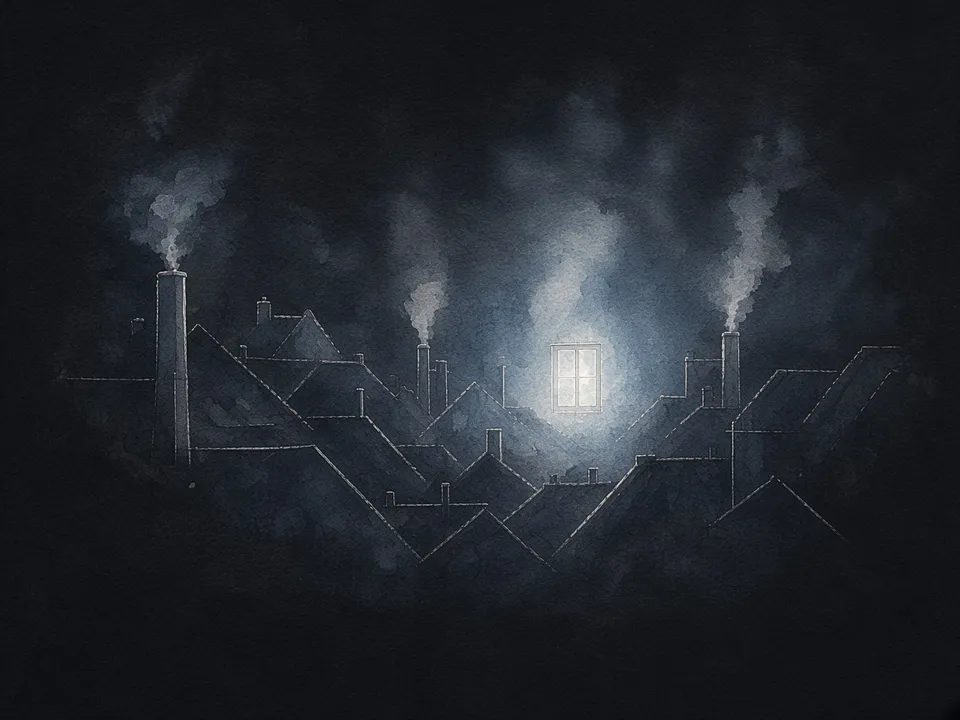
He types a question and receives an answer in a few seconds. On the screen everything is as light as a conversation. There is no smoke, no machine noise, and no truck passing by. AI is therefore easy to imagine as something in the cloud, weightless and almost free
Behind those few lines of text is a much heavier world. There are silicon wafers made through hundreds of steps, plants that use as much electricity as a small city, cables running across continents, and cooling systems that have to carry heat somewhere else. Artificial intelligence can live on a screen, but its body is built from copper, steel, water, and power
Leopold calls this an industrial mobilization. If scaling continues to produce stronger models, labs will want to build larger clusters by orders of ten. The cost is no longer a few servers in an office. It moves toward tens or hundreds of billions of dollars, pulling in power plants, chip supply chains, and land large enough to hold all of that infrastructure
Then AI is no longer a story that belongs only to software. A line of code can be copied at almost no cost, but a power plant cannot be doubled with a keyboard shortcut. Chips take years to expand in production, transmission lines need permits, and energy has to be present in the right place at the right time. What limits machine intelligence may not be ideas, but the speed at which people can build more body for it
This changes the map of power. A country with abundant energy, chip production, long-term capital, and a construction system fast enough will hold an advantage that is hard to see from a chatbot interface. Places that once treated electricity as only an operating cost may have to see it as a strategic resource. In an age when intelligence is manufactured, every power plant also becomes part of a thinking factory
But large money does not automatically guarantee a large result. An expensive cluster can still meet the limits of data, algorithms, or market demand. Infrastructure forecasts are always easy to exaggerate when everyone believes that building bigger is enough to win. The mobilization is therefore both a sign of belief and a bet placed on the assumption that the progress curve will not flatten soon
The next time he receives an answer from AI, he tries to look through the screen. Somewhere there are the lights of a data center, water carrying heat away, and a turbine still turning in the night. Intelligence that seemed invisible still needs a piece of land to stand on, and a current of electricity that is not allowed to go out
❤️ cowriter aethery